
Grounding Techniques to Calm Your Nervous System
By Melody Wright, LMFT
There’s a moment many people don’t talk about enough, in my opinion.
The moment when nothing is technically wrong, but your body won’t settle.
Work is over, yet your chest feels tight. You finally sit down, and your mind starts racing. You’re exhausted, but rest feels out of reach.
If this sounds familiar, it doesn’t mean you’re bad at managing stress. It usually means your nervous system has been carrying more than it knows how to put down, and it’s asking for support.
Not in the form of advice.
Not in the form of “just relax.”
But in a language your body actually understands.
That’s where grounding techniques come in.
Why Your Nervous System Won’t Just “Calm Down”
Your nervous system’s job is protection. It’s constantly scanning for danger and safety, even when you’re not aware of it.
When stress, burnout, anxiety, or unresolved experiences stack up, your body can get stuck in survival mode—fight, flight, or freeze. This is why you might feel:
Anxious for no clear reason
On edge, irritable, or overwhelmed
Disconnected or numb
Tense, restless, or unable to relax
Tired but wired at the same time
You might feel like your body is overreacting, but it’s actually responding exactly the way your nervous system should when it’s been under pressure for too long.
Grounding techniques help by gently reminding your body: You’re here, you’re safe. And you can soften now.
How Grounding Works in the Nervous System
Grounding techniques are somatic tools or body-based practices that can calm the nervous system by bringing your awareness into the present moment.
If you’ve ever explored the idea of mindful living, grounding is one of the most practical ways to do that in your body. If you’d like to explore this connection between presence and healing more deeply, check out our blog, The Art of Mindfulness: Harnessing the Power of the Present Moment.
Unlike coping strategies that focus on talking yourself out of how you feel or trying to “think positively,” grounding doesn’t ask you to analyze your emotions or change your thoughts.
Instead, it works by engaging your senses, breath, and physical body.
This matters because when your nervous system is activated, logic isn’t what it needs first…safety is.
Grounding is one of the ways you can begin offering that sense of safety to both your mind and body.
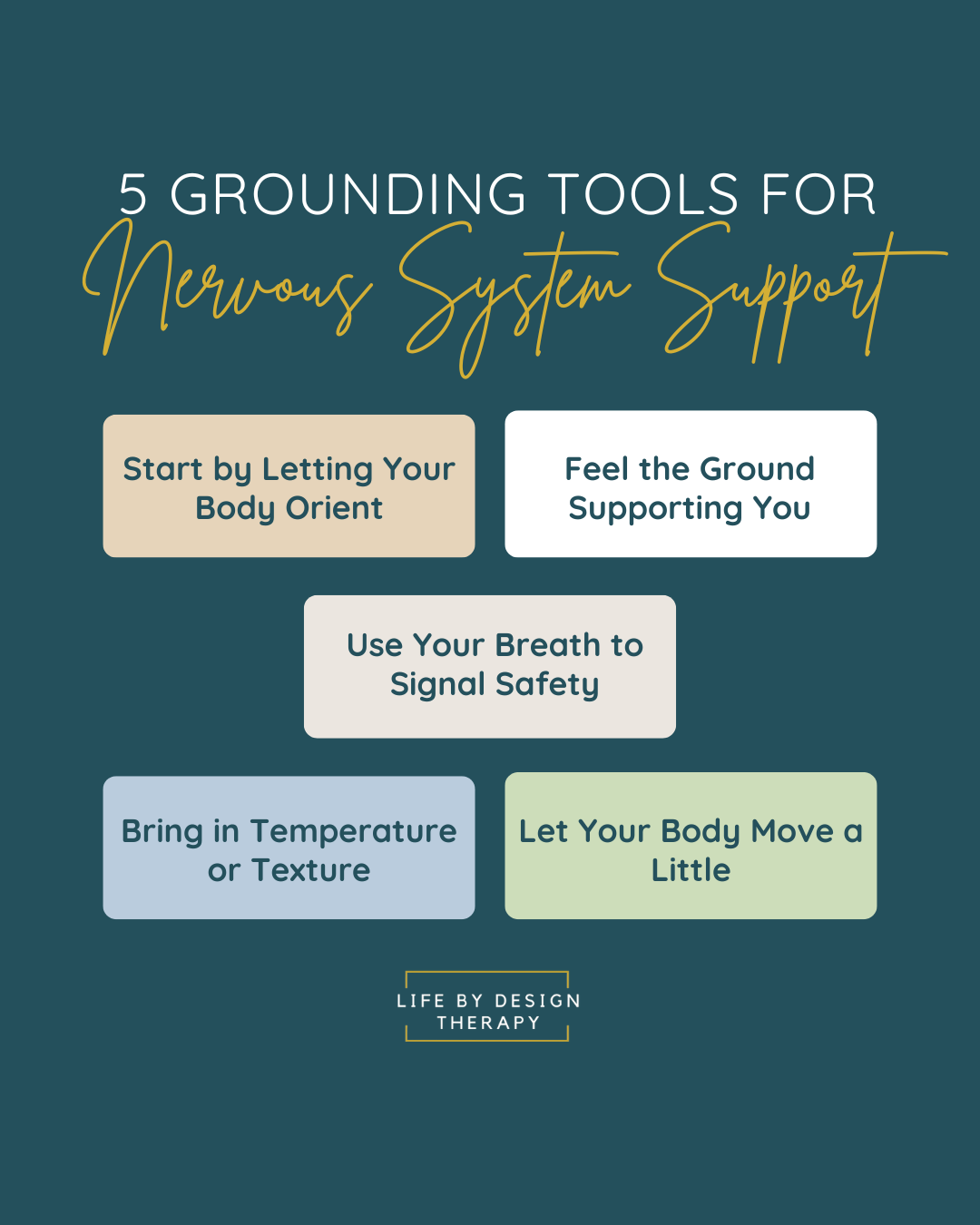
5 Grounding Techniques to Calm Your Nervous System (That Don’t Feel Forced)
Now, before you start making a mental checklist or grading yourself on how well you’re doing this…I want you to pause for a second.
You don’t need to do all of these. You don’t even need to do them perfectly. Think of these as open invitations rather than rigid assignments.
1. Start by Letting Your Body Orient
Before anything else, let your body take in where you are.
Slowly look around the room.
Notice the walls, the light, the objects near you.
Let your eyes land on something neutral or comforting.
You might quietly think:
“This is where I am right now.”
This simple act, called orienting, helps your nervous system update itself from past or future stress back into the present.
2. Feel the Ground Supporting You
So much anxiety comes from feeling like you have to hold everything together on your own.
As silly as it might sound…let the ground help.
Notice your feet against the floor, or the chair supporting your weight.
Place a hand on your legs or chest if that feels calming.
In this moment, you don’t need to focus on relaxing or changing anything. Just let yourself notice that you’re being held, and that, for this moment, you don’t have to hold everything on your own.
For many people, this alone starts to reduce nervous system activation.
3. Use Your Breath to Signal Safety
Breathing techniques can be a huge support to your nervous system, even in the middle of a stressful moment.
It doesn’t need to be deep breathing or anything special. Even small, simple practices can help.
Here’s a simple exercise you can try:
Inhale through your nose
Exhale slowly through your mouth
Let the exhale be just a little longer than the inhale - think inhale for 4 counts, exhale for 6 counts.
Even a few slow breaths can tell your body that it’s safe to start relaxing.
This is one of the most effective grounding techniques for anxiety and stress because it directly engages your parasympathetic nervous system, helping your body move out of fight, flight, or freeze and back into a state of safety.
4. Bring in Temperature or Texture
When thoughts feel overwhelming, sensation can help anchor you.
Notice:
The warmth of a mug
The coolness of water on your hands
The soft texture of a blanket
Focus on the sensation itself and quietly name what you notice—warm, cool, soft, solid.
Doing this helps your body stay anchored in the present, rather than trailing elsewhere.
5. Let Your Body Move a Little
Although we often associate grounding with stillness, sometimes the energy you’re experiencing needs a different direction. In those moments, your body may need movement instead of quiet.
And that’s okay.
In these moments, try gentle movement:
Rolling your shoulders
Stretching your arms
Rocking slightly side to side
Movement can help release stored stress or anxious energy and bring your body back into a state of calm and regulation.
Follow what feels natural; there’s no right way or wrong way to do this.
Why Grounding Techniques Can Feel Hard
For some people, especially those with trauma or chronic stress, slowing down can feel uncomfortable at first. This is completely normal!
If that’s you, here are a few tips:
Keep grounding brief, even one minute can be enough
Focus on external cues (what you see or touch)
Choose movement-based grounding over stillness
Your nervous system learns safety slowly, and that’s okay.
This is also why somatic therapy can be so helpful. You don’t have to navigate nervous system regulation alone.
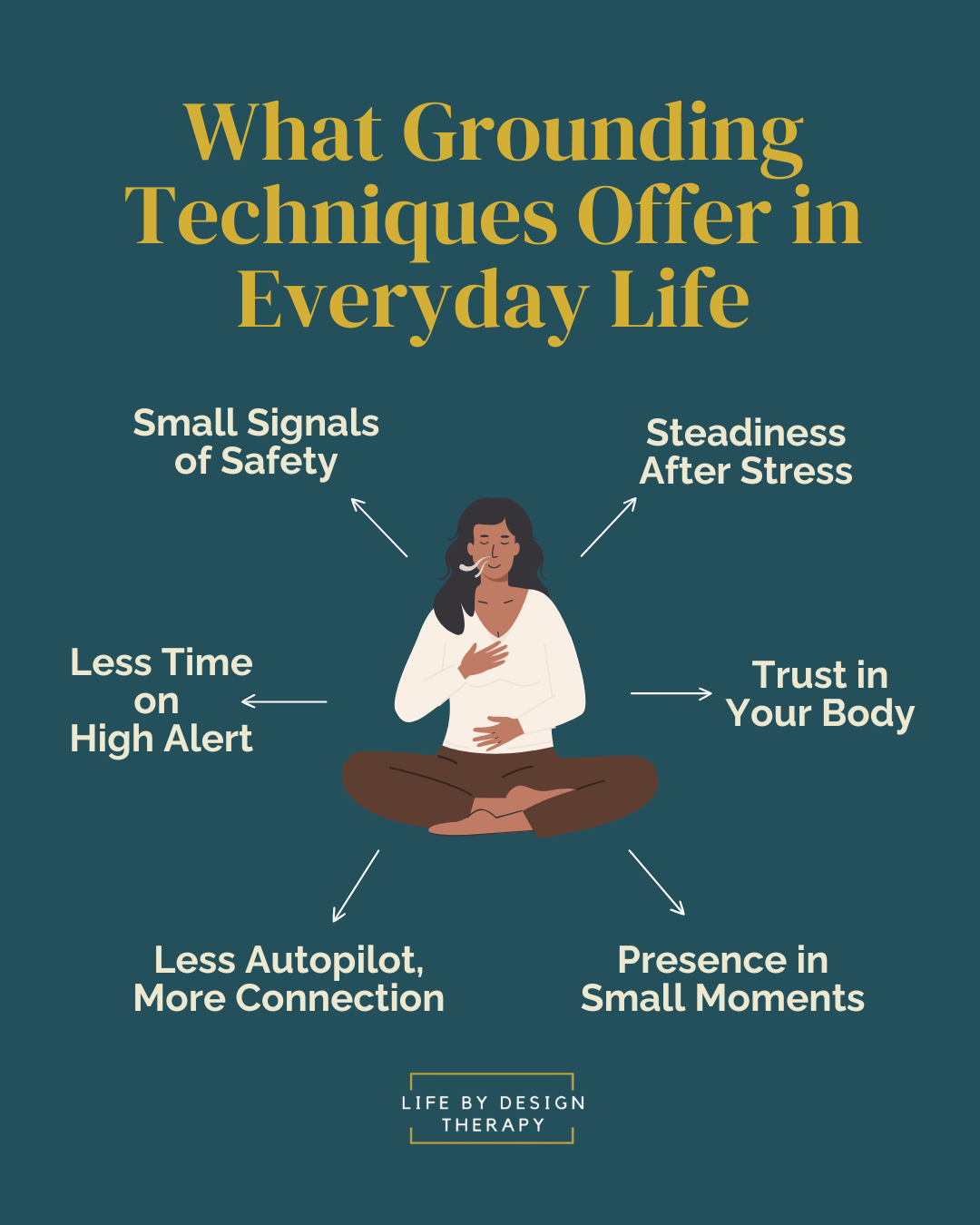
What Grounding Techniques Offer in Everyday Life
Grounding techniques aren’t meant to erase emotion or make life feel easy, and they’re not about forcing calm, positive thinking, or trying to override what you’re feeling.
Instead, grounding works at the level of the nervous system.
When you practice grounding, you’re sending your body small, repeated signals that it’s safe enough to slow down. Over time, your nervous system learns that it doesn’t have to stay on high alert all the time and that it can soften without losing control or awareness.
This is how nervous system regulation happens: not in big breakthroughs, but in quiet moments of noticing support, sensation, and presence.
With practice, grounding becomes something you naturally return to throughout the day.
Not just when anxiety spikes or stress feels overwhelming, but in ordinary moments, like while sitting at your desk, washing your hands, or taking a breath between tasks.
These small check-ins help you stay connected to your body instead of pushing through on autopilot.
And slowly, that connection builds trust; not in the sense of forcing yourself to feel better, but in learning that your body can experience emotions, respond to stress, and still come back to a place of steadiness.
That’s the real work of grounding, not constant calm, but a nervous system that knows how to find its footing again.
Final Thoughts
If you’ve been feeling anxious, overwhelmed, disconnected, or exhausted, it’s understandable. Given the pace of life, the pressure to keep up, and how little space we’re given to rest or process, these feelings are often a natural response, not a sign that anything is “wrong” with you.
And if you’ve ever found yourself wondering why you feel this way or blaming yourself for it, that’s a really common place to go.
These experiences aren’t a personal flaw, they’re often signs of a nervous system that has been working overtime to try to keep you safe.
Your body has been doing its best, and those patterns can be exhausting, but they come from protection, not weakness.
Grounding techniques are one way to begin supporting your nervous system. They help your body find moments of steadiness and relief in everyday life.
But sometimes, support needs to go deeper, especially when stress, anxiety, or past experiences have been living in your body for a long time.
That’s where somatic and holistic therapy can be especially powerful.
At Life By Design Therapy™, we focus on more than just talking through symptoms. Our somatic and holistic approach helps you understand how your nervous system has adapted, and gently supports your body in learning that safety is possible again.
“Therapy becomes a place where you don’t have to push through or explain everything, and your body is part of the healing process.”
There’s no pressure to rush or “fix” yourself. Healing happens slowly, in relationship, and at a pace your nervous system can trust.
You deserve support that meets you where you are.
This Week's Affirmations
My body is doing its best to protect me, and I can meet it with care.
In this moment, I am safe.
Support is available to me, and I am allowed to receive it.
I don’t need to force calm for healing to happen.
I am learning to trust my body again.
Additional Resources
**If you’re interested in learning more about ways to regulate your nervous system, check out these books below:
The Body Keeps the Score: Brain, Mind, and Body in the Healing of Trauma by Bessel van der Kolk M.D
Polyvagal Theory in Therapy: Engaging the Rhythm of Regulation by Deb Dana
Wherever You Go, There You Are: Mindfulness Meditation in Everyday Life by Jon Kabat-Zinn PhD
Radical Acceptance: Embracing Your Life With the Heart of a Buddha by Tara Brach

