

The Real Reason Self-Compassion Feels Uncomfortable
By Melody Wright, LMFT
Imagine you're cooking dinner and accidentally grab the handle of a hot pan.
You feel the burn and immediately pull your hand away. You run it under cool water, find something to treat it, and you're probably a little more careful the next time you reach for that pan.
When we experience physical pain, we instinctively know that whatever is injured needs care and attention. However, when we experience emotional pain, we don’t always respond the same way – with care and attention.
For example, instead of responding to ourselves with care, our minds often begin looking for everything we did wrong, like:
Replaying a mistake that was made for the rest of the day.
Questioning what we could have done differently when we think we let someone down.
Focusing on everything we didn't finish after an exhausting week
If this were a burn on your hand, you wouldn't keep touching the hot pan to teach yourself a lesson. Yet when the pain is emotional, many of us do something surprisingly similar by returning to it again and again through criticism, shame, and overthinking.
Now I understand, being kind to yourself sounds like it should come naturally. But if you’ve ever found yourself in this position, you know it can be anything but easy.
What if I told you that there might be a reason for that…and it’s not your fault.
For a lot of us, self-criticism developed as a way of coping, protecting ourselves, or making sense of difficult lived experiences. Understanding where these patterns come from can help us make sense of why self-compassion sometimes feels so difficult. From there, we can begin to notice what gets in the way, how those patterns continue to show up in our lives, and what it might look like to respond to ourselves differently.
How Childhood Experiences Shape Negative Self-Talk
Self-criticism rarely develops out of nowhere. More often, it's something we learn over time.
As children, we naturally adapt to the environments we're growing up in. Over time, those early ways of coping can shape how we respond to ourselves when things feel hard.
For example:
A child who is frequently corrected may begin looking for their own mistakes before someone else points them out, hoping to avoid being corrected again.
A child growing up in a home where emotions often shifted without warning may learn to watch tone of voice, facial expressions, and mood changes, hoping to stay one step ahead.
A child whose family is already overwhelmed may avoid asking for help because they don’t want to add another problem. As they grow older, asking for help may feel selfish, and struggling may feel like something they should be able to handle on their own.
These aren't personality flaws. They're adaptations.
As children, those adaptations often make sense. They help us stay connected, avoid conflict, or find a sense of safety in the world around us.
As we grow older, though, those same adaptations can quietly become the rules we live by:
Don’t make mistakes.
Don’t ask for too much.
Keep everyone happy.
Take care of it yourself.
Over time, those rules can become the voice we hear inside our own heads.
That critical voice may be painful, but it isn’t pointless.
It's often trying to protect you from something it learned to fear, whether that's criticism, conflict, rejection, disappointment, or feeling like your needs were too much.
Sometimes that voice isn't even fully your own. It may sound a lot like the parent, caregiver, teacher, or other influential adult whose words or expectations became internalized over time. As children, we naturally absorb the messages we're given, especially when they feel connected to love, approval, or safety. Eventually, those messages can become the way we speak to ourselves.
That's why replacing self-criticism with a positive affirmation rarely creates lasting change, even though we may want it to. Before that critical voice can soften, it helps to understand where it came from, what it's trying to protect you from, and whether the messages it's repeating still belong in your life today.
Why Letting Go of Self-Criticism Can Feel Risky
If self-criticism has been part of your life for a long time, it's understandable that the idea of letting it go might feel uncomfortable.
You may even wonder, "If I'm not hard on myself anymore, what will keep me accountable?"
For so many of us, that critical voice has become tangled up with responsibility, motivation, and doing the right thing. So when we hear the words self-compassion, we might worry it means excusing harmful behavior, avoiding responsibility, or pretending everything is okay.
That isn't what self-compassion means in a therapeutic context.
Self-compassion allows us to look honestly at what happened without turning the experience into an attack on who we are.
So, it sounds less like, "It doesn't matter that I hurt someone," and more like, "I don't feel good about what happened. I want to understand it, repair what I can, and respond differently next time."
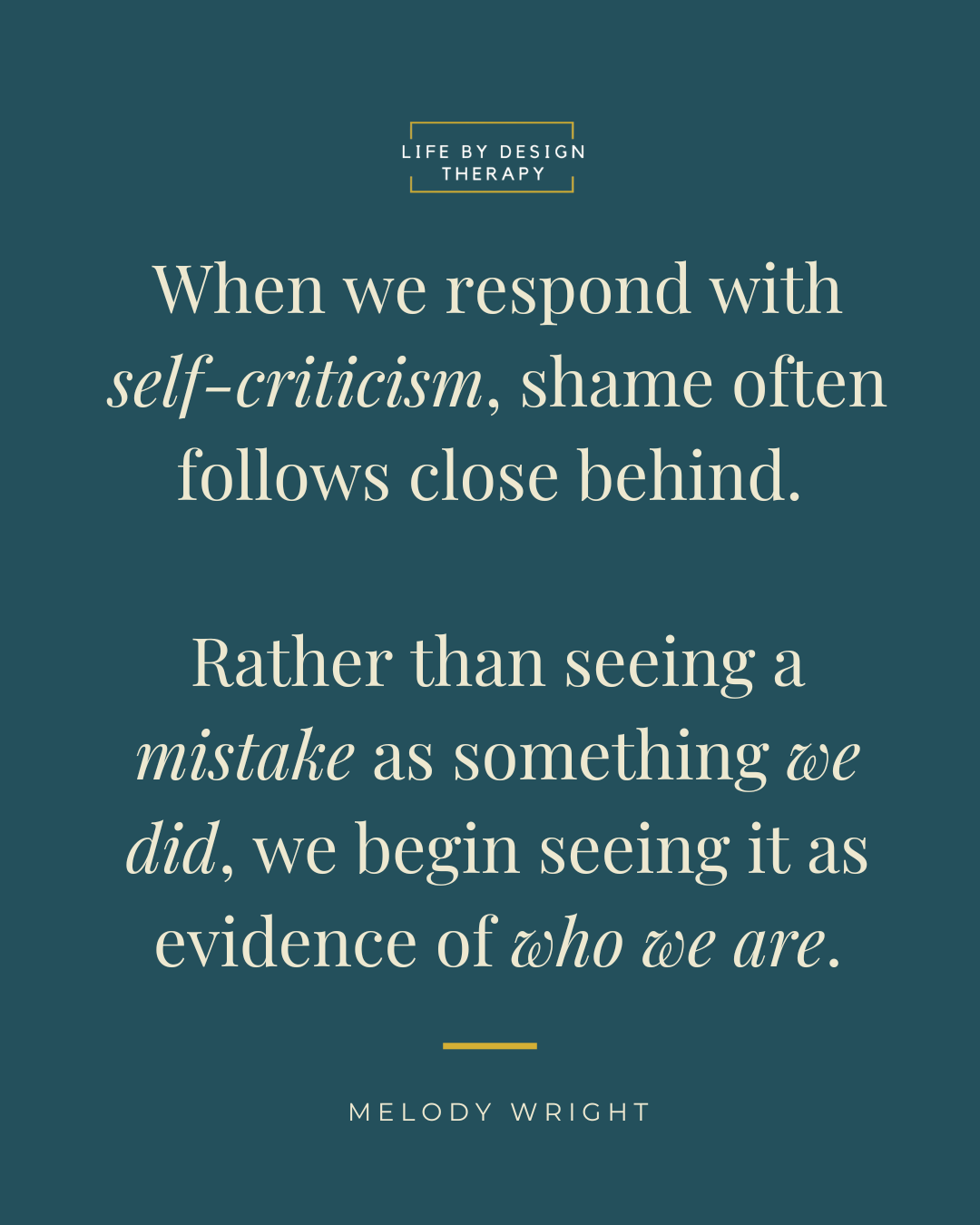
When we respond with self-criticism, shame often follows close behind. Rather than seeing a mistake as something we did, we begin seeing it as evidence of who we are.
Shame sounds like: “I made a mistake because there’s something wrong with me.”
Self-compassion makes room for a different response: “I made a mistake. What happened? What needs repair? What support would help me respond differently next time?”
Even when we understand that difference, choosing compassion over criticism can still feel risky.
You may be wondering what happens if you stop relying on the patterns that have helped you feel in control or keep moving forward.
If being hard on yourself is what pushes you to do better, what happens if you respond with compassion instead?
If anxiety is what reminds you to check everything three times, what happens when you relax?If guilt is what keeps you available to everyone, what happens if you stop carrying it?
And if these are the questions you’re asking yourself right now, they make sense. When these patterns have helped you feel productive, responsible, or in control, letting go of them can feel uncomfortable…even when you know they’re no longer serving you.
After all, these patterns may have helped you get through difficult moments, meet expectations, or feel more in control. At the same time, they may make it harder to rest without guilt, trust yourself without second-guessing, or let go of a mistake after you’ve already done what you can to repair it.
The goal isn't to stop caring, but rather it's to understand that caring and self-punishment aren't the same thing.
Why Self-Compassion Sometimes Brings Up Grief
One surprising thing about practicing self-compassion is that it doesn't always bring immediate relief. Sometimes, it brings grief.
It might seem surprising at first, but here's why.
As you begin responding to yourself with more compassion instead of criticism, you may start looking at your past through a different lens. Experiences you've always dismissed, justified, or blamed yourself for can begin to feel different.
In therapy, there are moments when someone suddenly realizes how young they were when they became responsible for a parent's emotions. They recognize that being "easy" often meant keeping their own needs private. They begin to understand that what they always thought of as independence may have developed because depending on other people didn't feel reliable.
Those realizations can be incredibly validating. They can also bring a deep sense of grief.
You may find yourself trying to hold more than one truth at the same time. My parents loved me, and there were ways they weren’t able to show up for me. They were struggling and doing the best they could, and I still needed more than they were able to give.
Holding those truths together can be painful. It can mean grieving the childhood, relationship, or experiences you needed but didn’t have. That grief doesn’t require you to decide that your parents were bad people or that nothing good existed. It means making space for the reality that something important may have been missing for you.
For many of us, our earliest relationships are where we first learn what love, safety, comfort, and care feel like. When some of those needs weren’t met, we can carry that with us into adulthood, including in the way we relate to and care for ourselves.
And sometimes, healing means learning to hold both: They may have done the best they could, and I can still acknowledge that I needed more.
These are questions therapists hear often, but the goal isn't to decide whether your parents were "good" or "bad." It's to make space for the full picture.
A caregiver may have loved you deeply and still been unable to consistently meet your emotional needs. They may have been doing the best they could with their own history, health, or circumstances. At the same time, you may still carry the effects of what their best couldn't provide.
Both of those things can be true.
Understanding their experience doesn't require you to minimize your own.
Sometimes self-compassion simply means allowing yourself to acknowledge the impact of what happened without immediately explaining it away, dismissing it, or telling yourself it shouldn't have mattered.
Practicing Self-Compassion When It Doesn't Feel Natural
Being compassionate toward yourself can sound simple: offering yourself the same patience, understanding, and care you might naturally extend to someone you love. But for many people, actually relating to themselves this way can feel surprisingly uncomfortable.
Instead of feeling reassuring, self-compassion may bring up tension, irritation, numbness, embarrassment, or even resistance. And often, that discomfort has less to do with whether you’re “doing it right” and more to do with what you’ve learned about how you’re supposed to respond to yourself.
From a somatic perspective, those reactions aren't something to push past; they're something to pay attention to.
Your body is always responding to what it has learned over time.
So, if warmth and care felt inconsistent growing up, receiving them (even from yourself) can feel unfamiliar. If being emotionally vulnerable was met with criticism, dismissal, or rejection, turning toward your feelings may cause your body to brace before your mind even realizes what's happening.
You might find yourself saying, "It's okay to rest," while noticing tightness in your chest or an urge to get up and be productive.
Intellectually, you might know you’re safe, but your nervous system may still be responding to what it learned a long time ago.
But please know that doesn't mean you're failing at self-compassion. It simply means your body learned a way of protecting you that once made sense.
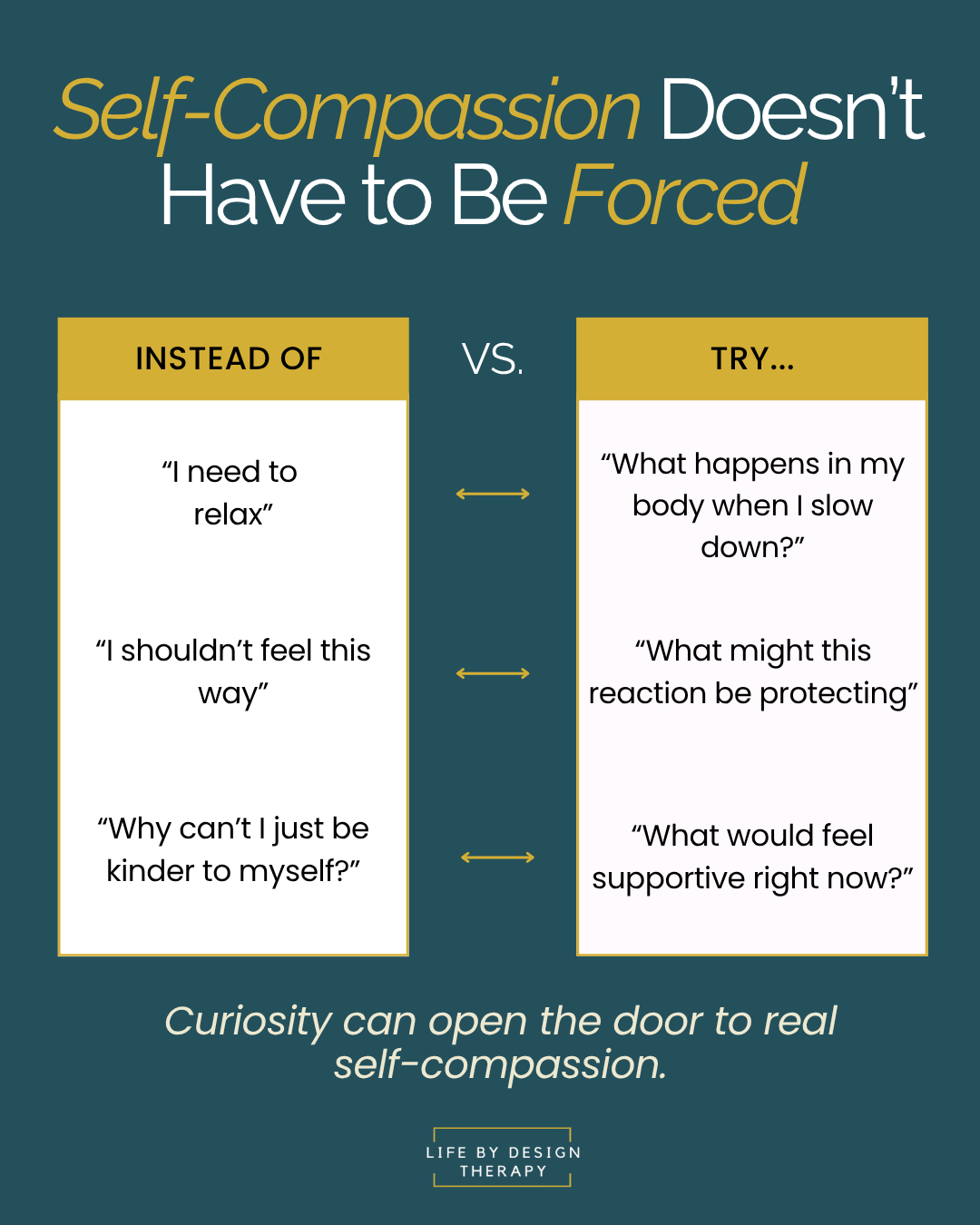
So rather than forcing yourself to relax or repeating a comforting statement until it feels true, you might begin with curiosity instead.
What happens when you slow down? Where do you notice the discomfort? Does your body feel safer keeping your eyes open? Moving around? Choosing words that feel less emotionally intense?
And honestly, sometimes the most compassionate response isn't pushing through the exercise. It's simply recognizing, "This doesn't feel supportive right now," and giving yourself permission to try a different approach.
Final Thoughts
If there's one thing I hope you take away from this, it's that self-compassion isn't about pretending things didn't happen or convincing yourself everything is okay.
It's about discovering that you can respond to yourself differently.
Over time, those small moments begin to give your mind and body a new experience. You can make a mistake without attacking yourself. You can disappoint someone without automatically assuming you've failed them. You can acknowledge your own needs without treating them as evidence that you're asking for too much.
Little by little, self-compassion becomes more believable. Not because you've found the perfect words, but because you're discovering that pain doesn't have to be followed by punishment.
If being kind to yourself still feels uncomfortable, that's okay. As we've explored throughout this blog, those patterns often developed for a reason. And just as they were learned, they can also be understood and, over time, gently reshaped.
If you'd like support as you begin that process, that's exactly the kind of work we do in therapy. At Life by Design Therapy, we offer holistic, trauma-informed, and somatic therapy to help people better understand these patterns and build new ways of relating to themselves. Whether you're looking for therapy in Berkeley or online therapy anywhere in California, we're here to support you. If you're ready to begin that journey, we'd love to connect.
This Week's Affirmations
I don’t have to force kindness; I can begin with honesty.
My needs are not an inconvenience.
I am allowed to rest before everything is finished.
Making a mistake does not mean there is something wrong with me.
I can listen to my inner critic without letting it control my choices.
Additional Resources
If you’re interested in exploring self-compassion, quieting your inner critic, and building a kinder relationship with yourself, the books below can be a helpful place to start.
Self-Compassion: The Proven Power of Being Kind to Yourself by Kristin Neff
Radical Acceptance: Embracing Your Life With the Heart of a Buddha by Tara Brach
The Untethered Soul: The Journey Beyond Yourself by Michael A. Singer
Emotional Intelligence: Why It Can Matter More Than IQ by Daniel Goleman
The Power of Now: A Guide to Spiritual Enlightenment by Eckhart Tolle
**Some product links are affiliate links, which means we'll receive a commission if you purchase through our link, at no extra cost to you. Please read the full disclosure here.


101 Ways to Practice Self-Compassion in Everyday Life
By Melody Wright, LMFT
It’s 8:17 in the morning, and somehow, you already feel behind.
You didn’t sleep well. The kitchen is a mess. There’s a message waiting for you that you haven’t answered, and you’re mentally rearranging the day before you’ve even had a chance to settle into it.
Then something small happens.
You forget an appointment. Spill your coffee. Lose your patience with someone you love. Whatever it is, the thought comes quickly:
“Why can’t I get it together?”
The moment passes, but the criticism follows you into the rest of your day.
Now you’re frustrated with yourself for being frustrated.
One difficult moment has turned into a running list of all the ways you should be doing better.
Sound familiar?
If a friend told you about the exact same morning, you’d probably notice how much they’ve been carrying. You’d remind them that they’re human and not decide that their entire personality is the problem.
But offering ourselves that same understanding can be much harder.
That’s where self-compassion comes in. Of course, self-compassion doesn’t mean avoiding responsibility or pretending everything is fine. It means being honest about what happened without adding another layer of shame. Therapy can help you step back and get to know that critical voice a little differently by understanding where it learned to speak that way, what tends to bring it forward, and why it believes being hard on you is the only way to keep you moving.
And did you know that self-compassion can show up in more ways than you might expect?
So, here are 101 simple ideas to help you explore what self-compassion can look like in real life. As you read through these 101 ideas, notice what feels comforting, what surprises you, and what brings up a little resistance.
There's no pressure to work through this entire list. Start with the ideas that feel most meaningful to you.
What Self-Compassion Can Look Like in Everyday Life
1. Notice how you speak to yourself.
Pay attention to what you say internally after a mistake or difficult moment. If the words feel cruel rather than helpful, try saying it again with more care.
2. Name what you’re feeling without judging it.
Try “I’m feeling overwhelmed” instead of “I’m being ridiculous.” Naming the emotion helps you understand your experience without making it a flaw.
3. Let yourself have a hard day.
Not every difficult day needs to be rescued, reframed, or made productive. Sometimes acknowledging that today is hard is enough.
4. Ask what you need before asking what you should do.
Before pushing through, pause and check whether you need food, rest, movement, support, space, or something else entirely.
5. Let “good enough” be enough.
Not everything requires your highest level of effort. Some things can simply be completed and released.
6. Stop using one mistake as evidence against yourself.
Forgetting something doesn’t make you irresponsible. Losing your patience doesn’t erase every loving moment that came before it.
7. Give yourself a moment before responding.
A few quiet seconds can help you notice what’s happening inside before reacting from stress, fear, or defensiveness.
8. Remember that your capacity can change from day to day.
What felt manageable yesterday may feel heavy today. Adjusting to your current capacity isn’t a failure.
9. Choose the easier option when you need it.
Make the simple dinner. Buy the shortcut. Take the direct route. You don’t have to make life harder to prove you’re trying.
10. Apologize without attacking your character.
You can say, “I’m sorry. I want to handle that differently next time,” without calling yourself a terrible person.
11. Rest before everything is finished.
Your need for rest doesn’t begin only after the entire list is complete.
12. Place a hand somewhere comforting on your body.
Rest it on your chest, stomach, arm, or face. A gentle touch can offer your nervous system a small cue of safety and support.
13. Let yourself feel disappointed.
You don’t have to minimize what mattered to you simply because someone else might not understand.
14. Notice when “I should” is creating shame.
Ask whether the expectation is realistic, necessary, or even yours.
15. Speak to yourself like someone worth helping.
Instead of asking, “What’s wrong with me?” try, “What would make this a little easier?”
16. Allow yourself to change your mind.
New information, changing needs, and personal growth can all lead you to make a different choice.
17. Stop explaining every boundary.
A simple no can be enough. You don’t always owe someone a detailed account of your limits.
18. Recognize when you’re overstimulated.
Irritability may be a sign that your system needs less noise, fewer demands, or a quieter environment, not proof that you’re difficult.
19. Eat before you’ve earned a break.
Food is a basic need, not a reward for finishing enough work.
20. Let yourself ask for reassurance.
Needing reassurance sometimes doesn’t make you needy. It makes you someone who benefits from connection.
21. Give yourself more time than you think you should need.
Healing, grieving, learning, and adjusting rarely follow the timeline we imagine for them.
22. Allow an uncomfortable feeling to exist.
You don’t have to fix every emotion immediately. Sometimes feelings need to be felt before they begin to shift.
23. Look beneath procrastination.
Before calling yourself lazy, ask whether the task feels confusing, overwhelming, emotionally loaded, or too large to begin.
24. Break the task into a smaller first step.
Self-compassion can be opening the document, washing one dish, or making one phone call instead of demanding that you do everything at once.
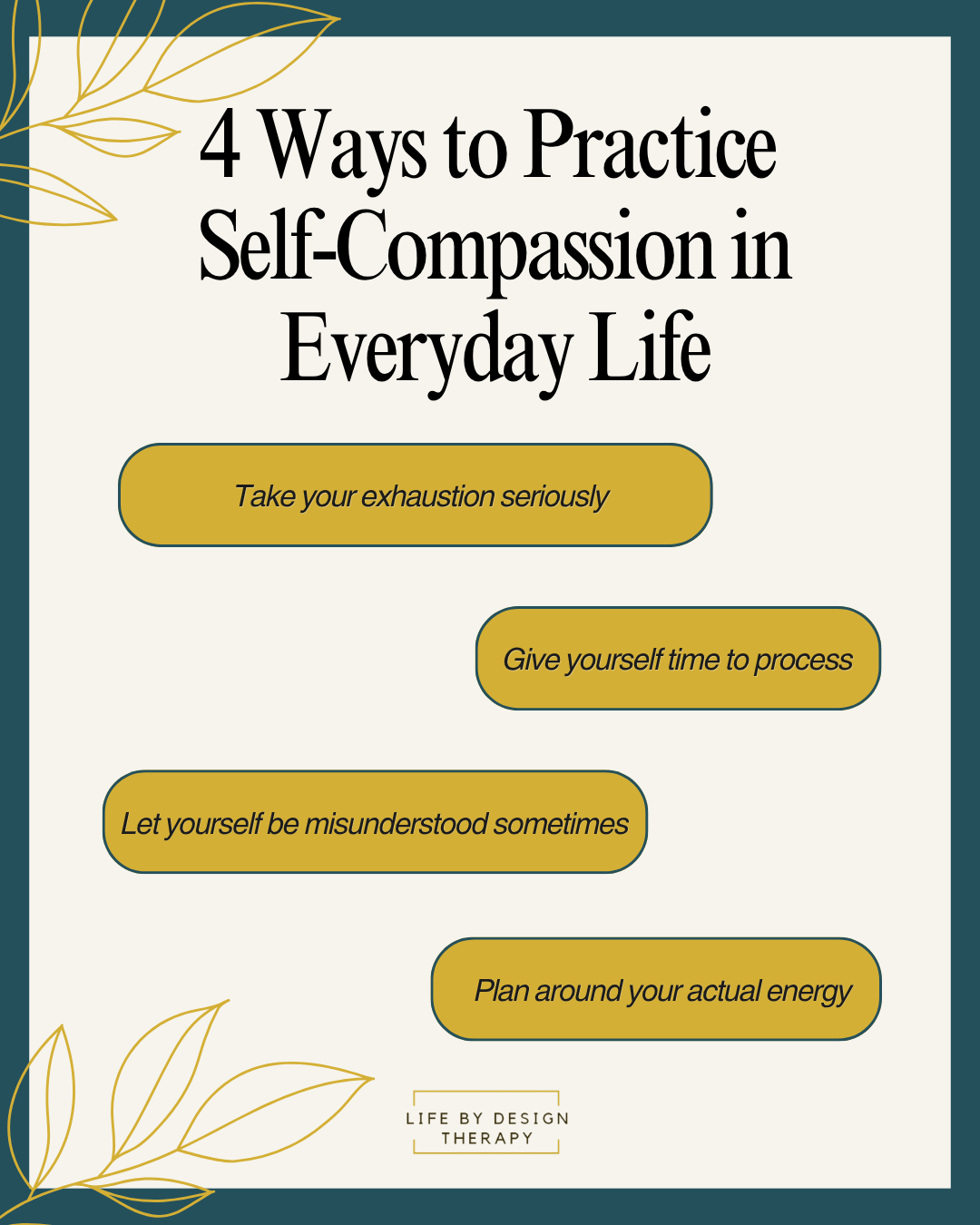
25. Take your exhaustion seriously.
You don’t have to wait until you’re completely depleted before responding to your need for rest.
26. Keep promises to yourself small and realistic.
A doable promise builds trust with yourself more effectively than an ambitious one you don’t have the capacity to keep.
27. Forgive yourself for not knowing then what you know now.
You made past choices with the awareness, resources, and support you had at the time.
28. Stop comparing your private struggles to someone else’s public life.
You rarely know what is happening outside the small piece another person chooses to share.
29. Unfollow accounts that leave you feeling inadequate.
You’re allowed to protect your emotional space, even when the content is labeled inspiring or helpful.
30. Notice when self-improvement becomes self-rejection.
Growth can come from care and curiosity. You don’t have to dislike yourself into becoming someone new.
31. Give yourself credit for what no one else sees.
The boundary you held, the reaction you interrupted, or the day you kept going gently still counts.
32. Allow yourself to be a beginner.
You are not supposed to be immediately good at something you’ve only just begun learning.
33. Pause before saying yes.
Give yourself time to check your energy, schedule, and actual desire before committing.
34. Let your body move without making it about punishment.
Stretch, walk, dance, or move in a way that feels supportive rather than trying to make up for what you ate.
35. Wear clothes that fit the body you have today.
You deserve to feel comfortable now, not only after your body changes.
36. Stop treating your body like a problem to solve.
Your relationship with your body can include listening, care, and respect, even when
loving every part of it feels out of reach.
37. Notice where you’re holding tension.
Unclench your jaw, lower your shoulders, or soften your hands. You may be bracing without realizing it.
38. Take a break from analyzing yourself.
Not every thought, reaction, or feeling needs to become a personal growth project.
39. Let yourself enjoy something without making it productive.
Read, garden, create, or rest because you like it…not because it improves you.
40. Make room for mixed emotions.
You can love someone and feel frustrated with them. You can be grateful for an opportunity and still feel overwhelmed by it.
41. Let yourself grieve the version you hoped for.
Even when a decision is right, you may still need to grieve what you wanted it to be.
42. Recognize when you need comfort before advice.
You don’t always need a strategy. Sometimes you need warmth, understanding, or someone willing to sit beside you.
43. Choose a more believable thought.
If a positive affirmation feels forced, try something gentler, such as, “I don’t know how this will turn out, but I can take the next step.”
44. Notice when shame is telling you to hide.
Consider sharing what you’re carrying with someone who has earned your trust.
45. Give yourself permission to do less.
Reducing your workload or expectations may be the most responsible response to a demanding period.
46. Let a boundary disappoint someone.
Another person’s disappointment doesn’t automatically mean you’ve done something wrong.
47. Stop volunteering for every emotional job.
You don’t have to fix every mood, mediate every conflict, or make sure everyone is comfortable.
48. Ask for help before you reach your breaking point.
Support doesn’t have to be your last resort.
49. Receive help without immediately repaying it.
Let someone care for you without turning the moment into another obligation.
50. Allow yourself to take up space in a conversation.
Your experiences don’t need to be shortened, softened, or made more convenient for everyone else.
51. Trust the discomfort that tells you something isn’t right.
You don’t need airtight evidence before paying attention to how a person or situation affects you.
52. Stop calling yourself “too sensitive.”
Sensitivity may be showing you where something hurts, matters, or needs attention.
53. Give yourself time to process.
You don’t have to know how you feel or what you want the moment someone asks.
54. Let yourself say, “I don’t know.”
Uncertainty isn’t a personal failure. Sometimes it’s the most honest answer available.
55. Make repairs without demanding perfection.
A healthy relationship isn’t one where no one makes mistakes. It’s one where there is room to acknowledge harm, listen, and reconnect.
56. Notice when you’re abandoning yourself to avoid conflict.
Pay attention to moments when you agree, stay quiet, or overextend yourself because someone else’s discomfort feels unbearable.
57 Let your “no” remain a “no”.
You don’t have to change your answer simply because someone asks again.
58. Stop apologizing for having a need.
Try stating what you need without beginning with “Sorry.”
59. Allow relationships to be mutual.
You deserve connections where care, interest, effort, and support don’t flow in only one direction.
60. Check in with yourself after spending time with someone.
Notice whether you feel grounded, depleted, anxious, guarded, or able to be yourself.
61. Step away from a conversation that has become harmful.
You’re allowed to pause and return later rather than forcing yourself to remain engaged while overwhelmed.
62. Let yourself be misunderstood sometimes.
You can communicate clearly and kindly without controlling the story someone chooses to tell about you.
63. Offer yourself care after setting a boundary.
Even a needed boundary can bring guilt, fear, or grief. Those feelings don’t mean the boundary was wrong.
64. Parent yourself through difficult moments.
Ask what a safe, steady adult might say or do for you right now.
65. Remember that struggling doesn’t make you a bad parent.
Parenting can bring exhaustion, overstimulation, anger, and doubt alongside deep love.
66. Repair after losing your patience.
A sincere apology teaches more about relationships than pretending caregivers never make mistakes.
67. Lower the bar on hard family days.
A simple meal, extra screen time, or an unfinished chore doesn’t define the quality of your care.
68. Give yourself space outside of caregiving.
You are still a person with needs, interests, and an identity beyond what you provide for others.
69. Notice when guilt appears simply because you chose yourself.
Guilt can come from breaking an old pattern—not necessarily from doing something harmful.
70. Allow yourself to celebrate without minimizing it.
You don’t have to follow good news with a disclaimer or point out all the ways it could have been better.
71. Acknowledge the effort, not only the outcome.
Something can matter even when it doesn’t turn out the way you hoped.
72. Celebrate what you've already accomplished.
Pause long enough to recognize what you’ve completed before deciding it still isn’t enough.
73. Separate your productivity from your worth.
A slow day doesn’t make you less valuable than a productive one.
74. Build breathing room into your schedule.
Leaving space between commitments is a way of respecting your nervous system and your limits.
75. Take your lunch break.
You don’t have to prove your dedication by ignoring your body throughout the workday.
76. Ask for clarification instead of pretending you understand.
You’re allowed to need more information, examples, or time.
77. Let yourself make a decision without making it the perfect one.
Many choices become clear only after you make them and begin moving forward.
78. Accept that you cannot prevent every mistake.
Hypervigilance may make you feel prepared, but no amount of overthinking can remove all uncertainty.
79. Stop rehearsing every possible outcome.
When you notice your mind trying to prepare for everything, gently return to what is actually happening right now.
80. Set a limit on how long you’ll revisit a decision.
Reflection can be helpful. Repeatedly reopening the same choice may only deepen anxiety.
81. Let yourself start again without turning it into a punishment.
You can return to a habit, goal, or routine without criticizing yourself for stepping away from it.
82. Create routines that support you rather than control you.
A routine should help your life feel more manageable, not become another standard you can fail.
83. Make your environment easier to live in.
Put reminders where you’ll see them, keep needed items accessible, and use tools that reduce the amount you have to remember.
84. Make life a little easier on yourself. If headphones, written instructions, timers, comfort items, or other supports help, you're allowed to use them without feeling like you have to justify it.
85. Plan around your actual energy.
Build your day for the person you are, not the endlessly productive version of yourself you think you should be.
86. Give yourself a transition between roles.
Take a few minutes between work, parenting, caregiving, or social time to let your body and mind shift gears.
87. Leave something unfinished on purpose.
Practice walking away when you’ve reached your limit, even if there is still more that could be done.
88. Begin the day without immediately evaluating yourself.
Before checking your appearance, productivity, or notifications, give yourself a moment simply to arrive.
89. End the day without conducting a performance review.
Notice what the day held without reducing it to everything you failed to finish.
90. Keep a list of what helped.
When you feel more grounded or supported, make a note of it. You may need the reminder when things feel harder.
91. Create a comfort plan before you need it.
Write down the people, places, practices, and sensory comforts that help you feel steadier.
92. Use humor gently.
Sometimes laughing at an awkward moment can release tension. Just make sure the joke isn’t another way of being cruel to yourself.
93. Let tears be a physical release.
Crying doesn’t mean you’re falling apart. It may be your body’s way of moving through something words haven’t reached.
94. Accept care in forms that work for you.
Self-compassion doesn’t have to look like meditation, journaling, or bubble baths. It should feel supportive to your actual nervous system and life.
95. Notice when a coping strategy is no longer helping.
Thank yourself for finding a way to survive, then consider whether you need a different kind of support now.
96. Speak honestly in therapy.
You don’t need to protect your therapist from your anger, confusion, embarrassment, or disappointment. Therapy can hold more than the polished version of your experience.
97. Look for the need beneath the behavior.
Instead of asking why you’re acting this way, ask what the behavior may be trying to protect, avoid, communicate, or soothe.
98. Remember that healing isn’t linear.
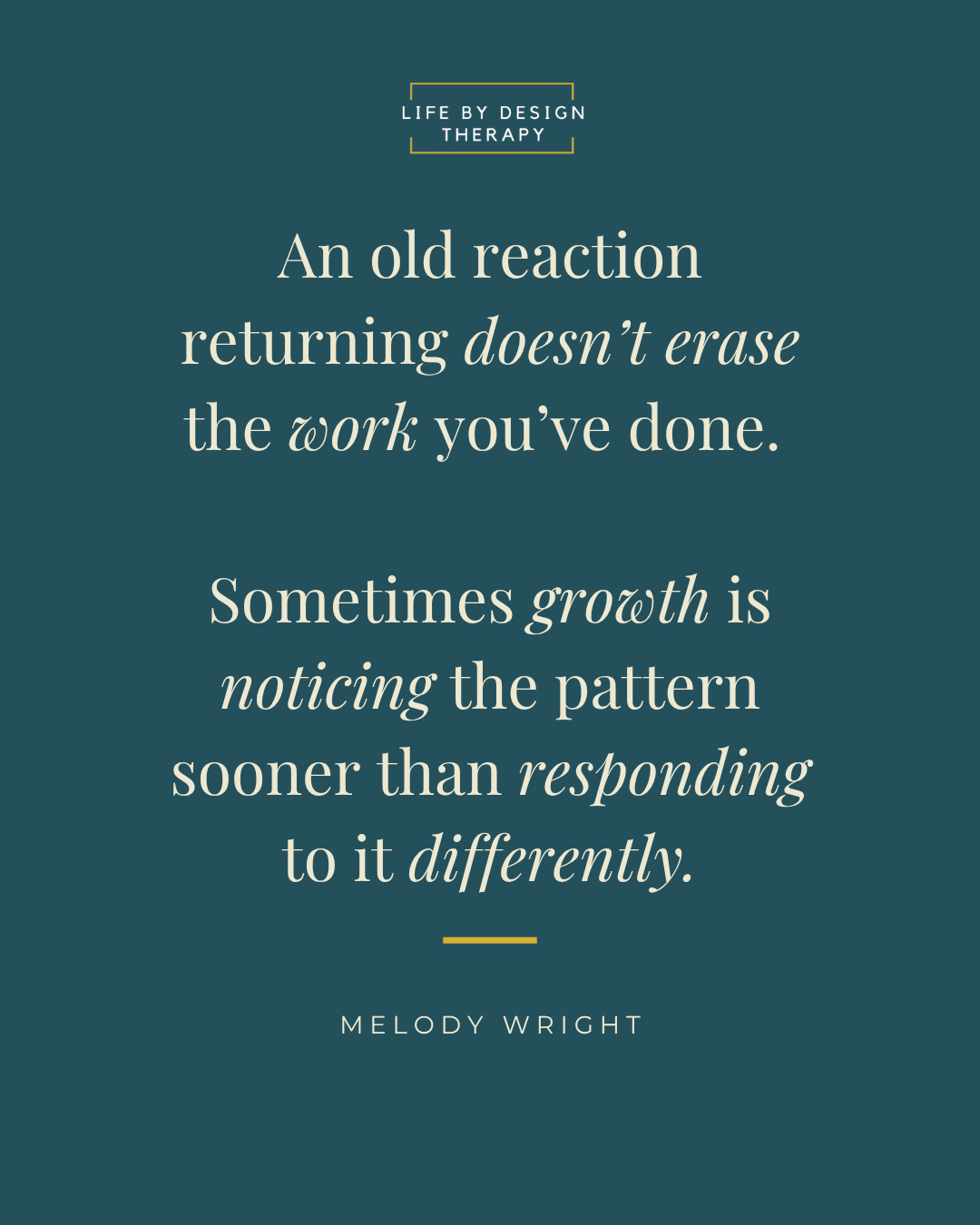
An old reaction returning doesn’t erase the work you’ve done. Sometimes growth is noticing the pattern sooner or responding to it differently.
99. Let yourself outgrow an old version of you.
You can appreciate who you needed to be while making room for who you’re becoming.
100. Compassion offered to the part of you that resists compassion.
If kindness feels uncomfortable, unsafe, or undeserved, don’t force it. Get curious about why receiving care, even from yourself, feels so difficult.
101.Begin again with one kind choice.
You don’t need to transform your entire relationship with yourself today. Start with the next moment and ask, What would it look like to be on my own side here?
Final Thoughts
My hope is that this list reminds you of one simple thing: that self-compassion doesn't have to be complicated. It can begin with one small choice.
And remember you don't have to try every idea here. Just choose one that feels doable today, and allow that to be enough. As those moments add up, you may begin to notice a kinder relationship with yourself taking shape.
And if that feels harder than it sounds, you're not failing. Sometimes self-criticism has deep roots. Therapy can help you understand where those patterns began and gently support you in building new ones.
Life by Design Therapy is a top-rated therapy center in Berkeley, California, offering holistic and somatic therapy for anxiety, trauma, relationship challenges, life transitions, and more. We provide in-person therapy in Berkeley and online therapy throughout California, helping you connect with your emotions, understand your patterns, and feel more supported within yourself.
If you’re ready to explore what self-compassion could look like in your own life, contact us to connect with a therapist.
This Week's Affirmations
My needs are worthy of my attention.
I can take responsibility without tearing myself down.
I can honor my limits without explaining or apologizing for them.
I am learning to speak to myself with patience and understanding.
One difficult moment does not define who I am.
Additional Resources
If you’re interested in exploring self-compassion, quieting your inner critic, and building a kinder relationship with yourself, the books below can be a helpful place to start.
Emotional Intelligence: Why It Can Matter More Than IQ by Daniel Goleman
The Power of Now: A Guide to Spiritual Enlightenment by Eckhart Tolle
Self-Compassion: The Proven Power of Being Kind to Yourself by Kristin Neff
Radical Acceptance: Embracing Your Life With the Heart of a Buddha by Tara Brach
The Untethered Soul: The Journey Beyond Yourself by Michael A. Singer
**Some product links are affiliate links, which means we'll receive a commission if you purchase through our link, at no extra cost to you. Please read the full disclosure here.

Grounding Techniques to Calm Your Nervous System
By Melody Wright, LMFT
There’s a moment many people don’t talk about enough, in my opinion.
The moment when nothing is technically wrong, but your body won’t settle.
Work is over, yet your chest feels tight. You finally sit down, and your mind starts racing. You’re exhausted, but rest feels out of reach.
If this sounds familiar, it doesn’t mean you’re bad at managing stress. It usually means your nervous system has been carrying more than it knows how to put down, and it’s asking for support.
Not in the form of advice.
Not in the form of “just relax.”
But in a language your body actually understands.
That’s where grounding techniques come in.
Why Your Nervous System Won’t Just “Calm Down”
Your nervous system’s job is protection. It’s constantly scanning for danger and safety, even when you’re not aware of it.
When stress, burnout, anxiety, or unresolved experiences stack up, your body can get stuck in survival mode—fight, flight, or freeze. This is why you might feel:
Anxious for no clear reason
On edge, irritable, or overwhelmed
Disconnected or numb
Tense, restless, or unable to relax
Tired but wired at the same time
You might feel like your body is overreacting, but it’s actually responding exactly the way your nervous system should when it’s been under pressure for too long.
Grounding techniques help by gently reminding your body: You’re here, you’re safe. And you can soften now.
How Grounding Works in the Nervous System
Grounding techniques are somatic tools or body-based practices that can calm the nervous system by bringing your awareness into the present moment.
If you’ve ever explored the idea of mindful living, grounding is one of the most practical ways to do that in your body. If you’d like to explore this connection between presence and healing more deeply, check out our blog, The Art of Mindfulness: Harnessing the Power of the Present Moment.
Unlike coping strategies that focus on talking yourself out of how you feel or trying to “think positively,” grounding doesn’t ask you to analyze your emotions or change your thoughts.
Instead, it works by engaging your senses, breath, and physical body.
This matters because when your nervous system is activated, logic isn’t what it needs first…safety is.
Grounding is one of the ways you can begin offering that sense of safety to both your mind and body.
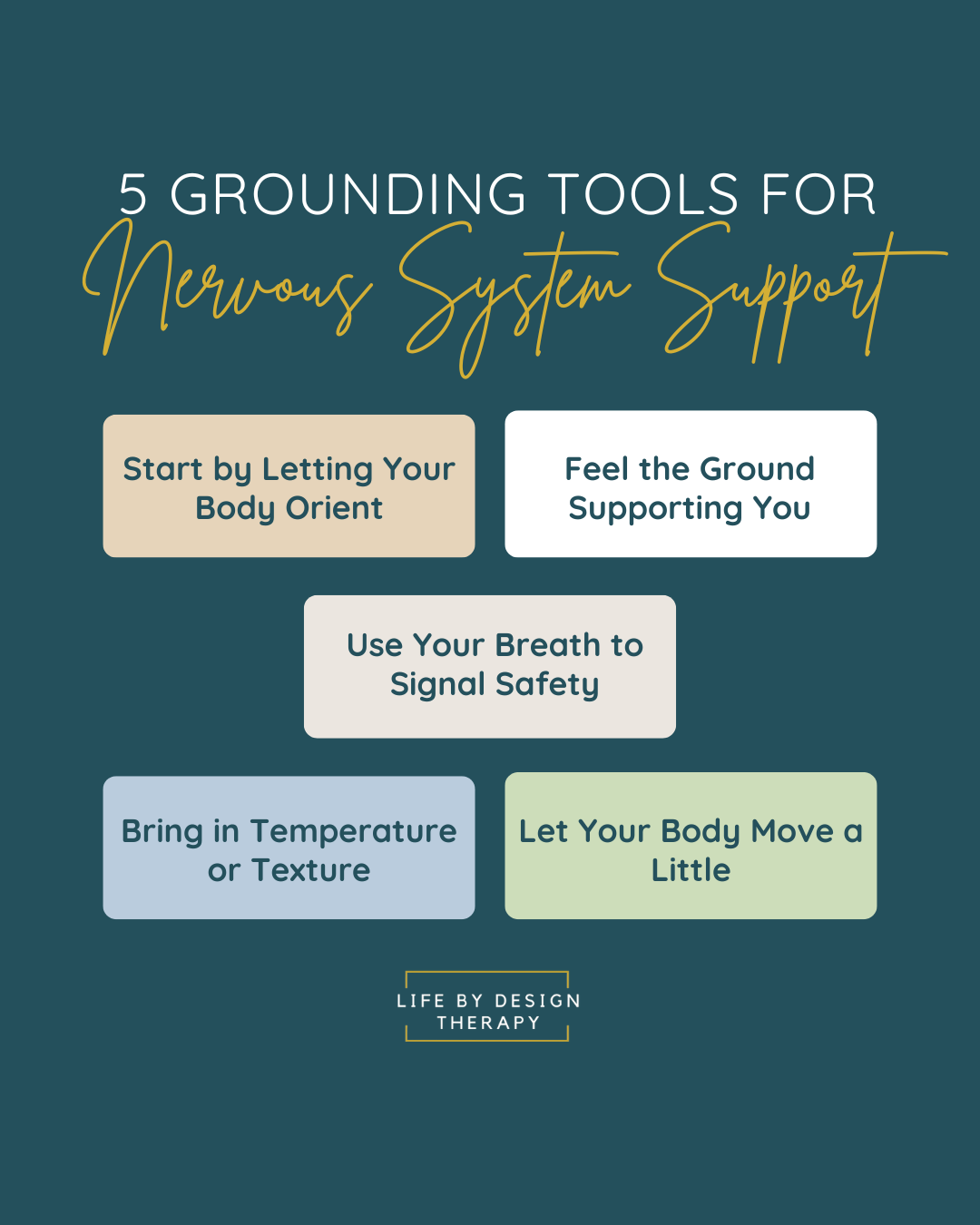
5 Grounding Techniques to Calm Your Nervous System (That Don’t Feel Forced)
Now, before you start making a mental checklist or grading yourself on how well you’re doing this…I want you to pause for a second.
You don’t need to do all of these. You don’t even need to do them perfectly. Think of these as open invitations rather than rigid assignments.
1. Start by Letting Your Body Orient
Before anything else, let your body take in where you are.
Slowly look around the room.
Notice the walls, the light, the objects near you.
Let your eyes land on something neutral or comforting.
You might quietly think:
“This is where I am right now.”
This simple act, called orienting, helps your nervous system update itself from past or future stress back into the present.
2. Feel the Ground Supporting You
So much anxiety comes from feeling like you have to hold everything together on your own.
As silly as it might sound…let the ground help.
Notice your feet against the floor, or the chair supporting your weight.
Place a hand on your legs or chest if that feels calming.
In this moment, you don’t need to focus on relaxing or changing anything. Just let yourself notice that you’re being held, and that, for this moment, you don’t have to hold everything on your own.
For many people, this alone starts to reduce nervous system activation.
3. Use Your Breath to Signal Safety
Breathing techniques can be a huge support to your nervous system, even in the middle of a stressful moment.
It doesn’t need to be deep breathing or anything special. Even small, simple practices can help.
Here’s a simple exercise you can try:
Inhale through your nose
Exhale slowly through your mouth
Let the exhale be just a little longer than the inhale - think inhale for 4 counts, exhale for 6 counts.
Even a few slow breaths can tell your body that it’s safe to start relaxing.
This is one of the most effective grounding techniques for anxiety and stress because it directly engages your parasympathetic nervous system, helping your body move out of fight, flight, or freeze and back into a state of safety.
4. Bring in Temperature or Texture
When thoughts feel overwhelming, sensation can help anchor you.
Notice:
The warmth of a mug
The coolness of water on your hands
The soft texture of a blanket
Focus on the sensation itself and quietly name what you notice—warm, cool, soft, solid.
Doing this helps your body stay anchored in the present, rather than trailing elsewhere.
5. Let Your Body Move a Little
Although we often associate grounding with stillness, sometimes the energy you’re experiencing needs a different direction. In those moments, your body may need movement instead of quiet.
And that’s okay.
In these moments, try gentle movement:
Rolling your shoulders
Stretching your arms
Rocking slightly side to side
Movement can help release stored stress or anxious energy and bring your body back into a state of calm and regulation.
Follow what feels natural; there’s no right way or wrong way to do this.
Why Grounding Techniques Can Feel Hard
For some people, especially those with trauma or chronic stress, slowing down can feel uncomfortable at first. This is completely normal!
If that’s you, here are a few tips:
Keep grounding brief, even one minute can be enough
Focus on external cues (what you see or touch)
Choose movement-based grounding over stillness
Your nervous system learns safety slowly, and that’s okay.
This is also why somatic therapy can be so helpful. You don’t have to navigate nervous system regulation alone.
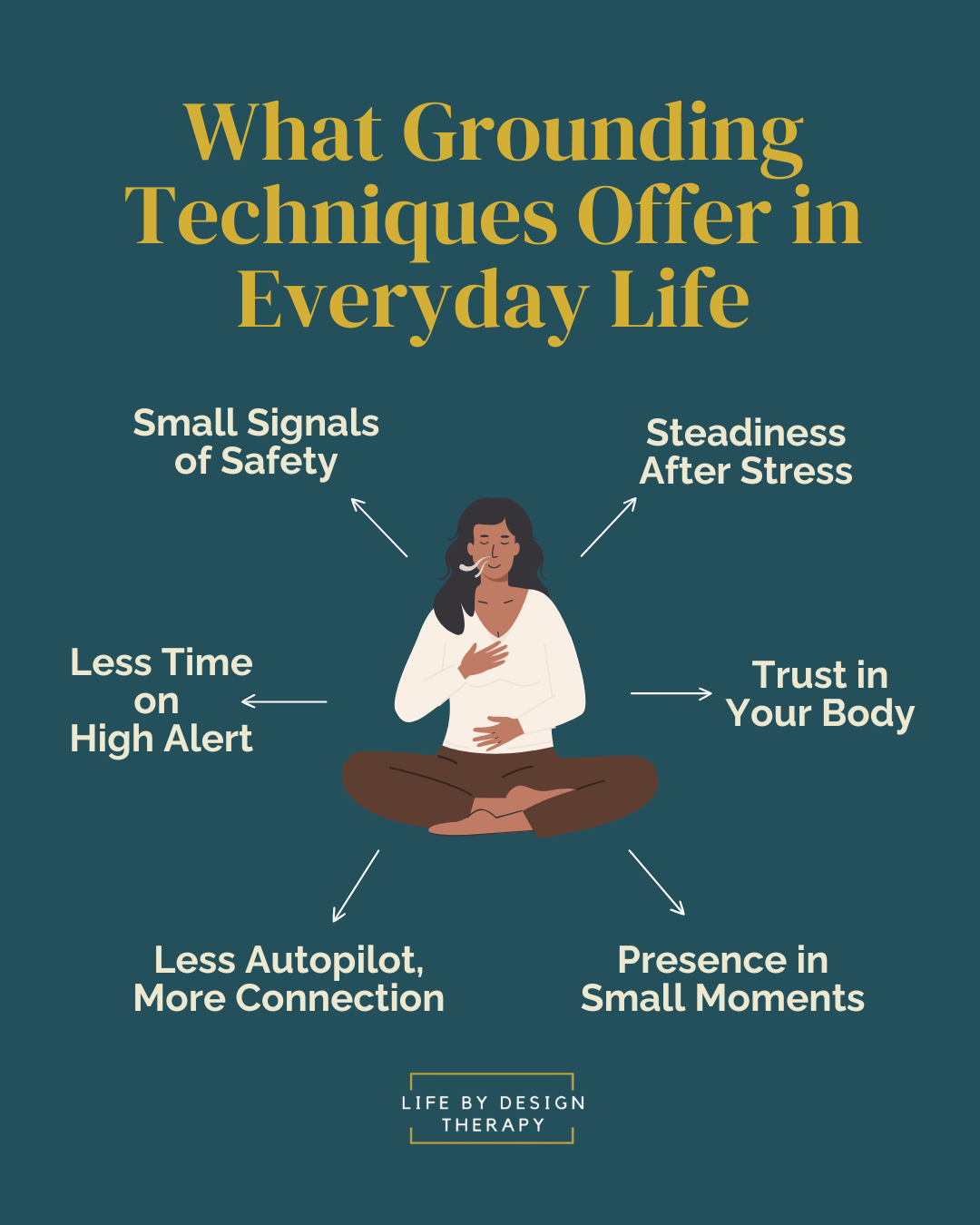
What Grounding Techniques Offer in Everyday Life
Grounding techniques aren’t meant to erase emotion or make life feel easy, and they’re not about forcing calm, positive thinking, or trying to override what you’re feeling.
Instead, grounding works at the level of the nervous system.
When you practice grounding, you’re sending your body small, repeated signals that it’s safe enough to slow down. Over time, your nervous system learns that it doesn’t have to stay on high alert all the time and that it can soften without losing control or awareness.
This is how nervous system regulation happens: not in big breakthroughs, but in quiet moments of noticing support, sensation, and presence.
With practice, grounding becomes something you naturally return to throughout the day.
Not just when anxiety spikes or stress feels overwhelming, but in ordinary moments, like while sitting at your desk, washing your hands, or taking a breath between tasks.
These small check-ins help you stay connected to your body instead of pushing through on autopilot.
And slowly, that connection builds trust; not in the sense of forcing yourself to feel better, but in learning that your body can experience emotions, respond to stress, and still come back to a place of steadiness.
That’s the real work of grounding, not constant calm, but a nervous system that knows how to find its footing again.
Final Thoughts
If you’ve been feeling anxious, overwhelmed, disconnected, or exhausted, it’s understandable. Given the pace of life, the pressure to keep up, and how little space we’re given to rest or process, these feelings are often a natural response, not a sign that anything is “wrong” with you.
And if you’ve ever found yourself wondering why you feel this way or blaming yourself for it, that’s a really common place to go.
These experiences aren’t a personal flaw, they’re often signs of a nervous system that has been working overtime to try to keep you safe.
Your body has been doing its best, and those patterns can be exhausting, but they come from protection, not weakness.
Grounding techniques are one way to begin supporting your nervous system. They help your body find moments of steadiness and relief in everyday life.
But sometimes, support needs to go deeper, especially when stress, anxiety, or past experiences have been living in your body for a long time.
That’s where somatic and holistic therapy can be especially powerful.
At Life By Design Therapy™, we focus on more than just talking through symptoms. Our somatic and holistic approach helps you understand how your nervous system has adapted, and gently supports your body in learning that safety is possible again.
“Therapy becomes a place where you don’t have to push through or explain everything, and your body is part of the healing process.”
There’s no pressure to rush or “fix” yourself. Healing happens slowly, in relationship, and at a pace your nervous system can trust.
You deserve support that meets you where you are.
This Week's Affirmations
My body is doing its best to protect me, and I can meet it with care.
In this moment, I am safe.
Support is available to me, and I am allowed to receive it.
I don’t need to force calm for healing to happen.
I am learning to trust my body again.
Additional Resources
**If you’re interested in learning more about ways to regulate your nervous system, check out these books below:
The Body Keeps the Score: Brain, Mind, and Body in the Healing of Trauma by Bessel van der Kolk M.D
Polyvagal Theory in Therapy: Engaging the Rhythm of Regulation by Deb Dana
Wherever You Go, There You Are: Mindfulness Meditation in Everyday Life by Jon Kabat-Zinn PhD
Radical Acceptance: Embracing Your Life With the Heart of a Buddha by Tara Brach

5 Intentional Transitions for a Regulated Mind and Body
By Melody Wright, LMFT
I recently realized I had lost the ability to be still.
Waiting for the coffee to brew? I’d scroll my phone.
Walking to the car? I’d put on a YouTube video.
Five minutes before a meeting? I’d squeeze in emails.
Every corner of my day got filled with something, some kind of noise, some kind of input.
At first, I thought this was a good thing. I was being efficient, right?
Maximizing every spare moment. But beneath the surface, it felt different.
I started noticing a strange unease. Everything on my list felt urgent, but none of it felt meaningful.
I was moving through life on autopilot, checking boxes without truly experiencing anything.
That’s when it hit me: I had removed all the open space in my day.
And without those moments, there was no room left to think, to be present, or to feel grounded.
That realization led me to what I now call intentional transitions.

What Are Transitions?
Transitions are the the natural flow between moments, guiding us from one rhythm to the next. When we move through them with awareness, they become grounding points that help us stay connected to ourselves instead of being swept up in constant motion.
Think about the white space around words on a page; without it, the text overwhelms you. Or music; without rests, the notes blur together.
Intentional transitions offer the same in life.
They give us space to reset, regulate, and move forward with more intention.
Why Transitions Matter
When my days were crammed with constant input, I carried conversations from one meeting into the next. I reacted quickly instead of thoughtfully. My body felt tense, my mind restless, and my energy scattered.
When I began practicing intentional transitions, things shifted:
I noticed my own thoughts and feelings instead of drowning them out.
I processed what had just happened before jumping into something new.
My nervous system felt calmer, less like it was always in fight-or-flight.
I made decisions with more intention, instead of reacting on autopilot.
We’re taught that if we have open space in our day, we should fill it. But the truth is, without intentional transitions, everything runs together, and we end up burnt out.
These conscious transitions don’t slow you down. They help you see what matters most.
5 Ways to Be More Intentional In Your Daily Transitions
You don’t need a lifestyle overhaul to create more space. Just a few intentional transitions, practiced consistently, can change the way you move through the world.
Here are five that have made the biggest difference for me:
1. The Morning Transition
Instead of grabbing my phone first thing, I give myself ten quiet minutes. No input, no planning. Sometimes I just sit. This transition feels like stretching my mind awake before the day begins.
Therapist Tip: Place a hand on your chest and one on your belly. Notice your breathing. Without forcing anything, let your breath arrive naturally. This anchors your body before the noise of the day begins.
2. Daily Reset Rituals
I used to barrel straight from one thing to the next, project to project, call to call, errand to errand. Now I mark transitions with small rituals: washing my hands after work, lighting a candle before dinner, or taking three breaths at the door before walking inside.
Therapist Tip: End your workday with a simple closing ritual: clear your workspace, open a window, or speak a grounding phrase to yourself. These small acts help your nervous system recognize the shift and ease into the evening.
3. Pauses in Conversation
I used to meet every silence with words, afraid it meant something was missing. But I’ve learned that quiet moments in conversation carry their own kind of meaning. Letting a pause exist, without hurrying to fill it, lets me stay present, hear more fully, and trust the natural flow between people.
Therapist Tip: When someone is speaking, notice your urge to prepare your response. Instead, ground your feet into the floor, feel the weight of your body in the chair, and let yourself fully receive before answering.
4. Unscheduled Time
I now keep at least one block of unscheduled time in my day, even if it’s just 15–30 minutes in between tasks. Sometimes I nap, sometimes I journal, sometimes I just exist. This transition from doing to simply being is often where my best insights surface.
Therapist Tip: Use this unscheduled time to connect with your senses. Step outside and notice what you hear, smell, or feel on your skin. Presence in the body clears mental clutter and makes the pause more restorative.
5. Turning Off Notifications
I didn’t realize how much energy alerts were stealing from me until I turned them off. Without the interruptions, my brain feels spacious, and my body isn’t startled every few minutes by a ding or buzz. This transition, from reacting to every ping to responding when I choose, gave me back so much peace.
Therapist Tip: If you feel pulled toward your phone, place it in another room and do a quick grounding exercise like pressing your hands together firmly, or planting your feet and imagining roots growing into the floor. When your body senses safety, it can finally settle and help you stay present.

The Challenges (And What They Taught Me)
At first, transitions didn’t feel natural.
I felt guilty for not being “productive.” But that guilt reminded me how much I tie my worth to output.
I got restless during the silence. But that restlessness showed me how conditioned my nervous system was to constant input.
I worried others would be frustrated if I wasn’t instantly available. But that fear reminded me I had trained people to expect it—and that I had the power to retrain those expectations.
Every challenge became part of the lesson. The discomfort wasn’t a sign of failure; it was a sign I was reclaiming something I’d forgotten how to do.
Final thoughts
If your days feel too full, too fast, or too noisy, being mindful of your transitions might be what you’re missing.
You don’t need to overhaul everything at once. Start with one:
🌱Maybe it’s a morning pause.
🌱Maybe it’s a ritual between tasks.
🌱Maybe it’s turning off notifications for an afternoon.
Try it for a week. Notice how your body feels. Notice what surfaces in the stillness.
For me, transitions aren’t about emptiness. They’re about perspective. They help me see what really matters, and give me the capacity to live with more intention.
So I’ll leave you with this: Where could you create an intentional transition today? Remember, there’s no right or wrong way to begin. Every pause, no matter how small, is a step toward greater clarity.
This Weeks Affirmations
Moments of quiet are not wasted; they restore my body and mind.
Creating space in my life helps me live with greater purpose.
I give myself permission to pause.
I allow gaps to support my body, mind, and spirit.
I am grounded, centered, and open when I give myself room to breathe.
Additional Resources
**If you’re interested in learning more about ways to support your mental health, check out these books below:
Wherever You Go, There You Are: Mindfulness Meditation in Everyday Life by Jon Kabat-Zinn PhD
The Miracle of Mindfulness: An Introduction to the Practice of Meditation by Thich Nhat Hanh
Radical Acceptance: Embracing Your Life With the Heart of a Buddha by Tara Brach
The Untethered Soul: The Journey Beyond Yourself by Michael A. Singer
Silence: The Power of Quiet in a World Full of Noise by Thich Nhat Hanh
The Power of Now: A Guide to Spiritual Enlightenment by Eckhart Tolle
**Some product links are affiliate links, which means we'll receive a commission if you purchase through our link, at no extra cost to you. Please read the full disclosure here.