
What Is Body Neutrality (And How Is It Different From Body Positivity)?
By Melody Wright, LMFT
You didn’t wake up this morning planning to think about your body…but somehow, it still happened.
Maybe it was when you got dressed.
Or caught your reflection in the mirror.
Or saw someone online and, without even meaning to, started comparing.
And just like that, your body became something to evaluate again.
For a lot of people, this happens dozens of times a day, so automatically, they don’t even notice it anymore.
But over time, it can start to feel exhausting.
Because the message is everywhere.
An ad suggesting your skin could be smoother.
A post promising the “best shape of your life.”
A subtle before-and-after transformation that makes you wonder if you should be doing more.
It’s not always obvious. Sometimes it’s even framed as “wellness” or “self-improvement.”
But underneath it, there’s often the same message: You’re not quite there yet.
And when you’re surrounded by that every day, it slowly shapes how you relate to your body.
Instead of simply living in your body…you start monitoring it.
You notice how it looks.
You compare it to others.
You wonder what needs to change.
If you’ve ever felt stuck in that cycle, it makes sense given what you’re exposed to on a daily basis.
A lot of people don’t hate their bodies… but they don’t feel at ease in them either. They’re stuck somewhere in the middle between “I don’t like my body” and “I’m supposed to love it.”
And more people feel this than you’d think… they’re just not always talking about it. And it’s where a different approach starts to come into the conversation: Body neutrality.
Body neutrality is one of those phrases that’s been gaining a lot of attention lately… but it’s also often misunderstood.
Body neutrality is the practice of relating to your body without judgment, focusing on what your body does for you rather than how it looks. It removes the pressure to feel positive about your body at all times and instead focuses on what your body does for you and the role it plays in your life, rather than on how it looks.
It’s more like taking a step back from constantly judging it. Letting your body just be there, without needing to analyze or critique it all the time.
So, if you pause for a moment and notice your own internal dialogue, you might realize how often your body has been filtered through one core question:
“How does my body look right now?”
For a lot of us, that question didn’t just come out of nowhere. It was shaped over time through comments, media, comparisons, and subtle messaging that taught us our bodies were something to monitor, improve, or fix.
And that’s exactly where body neutrality begins to help shift things.
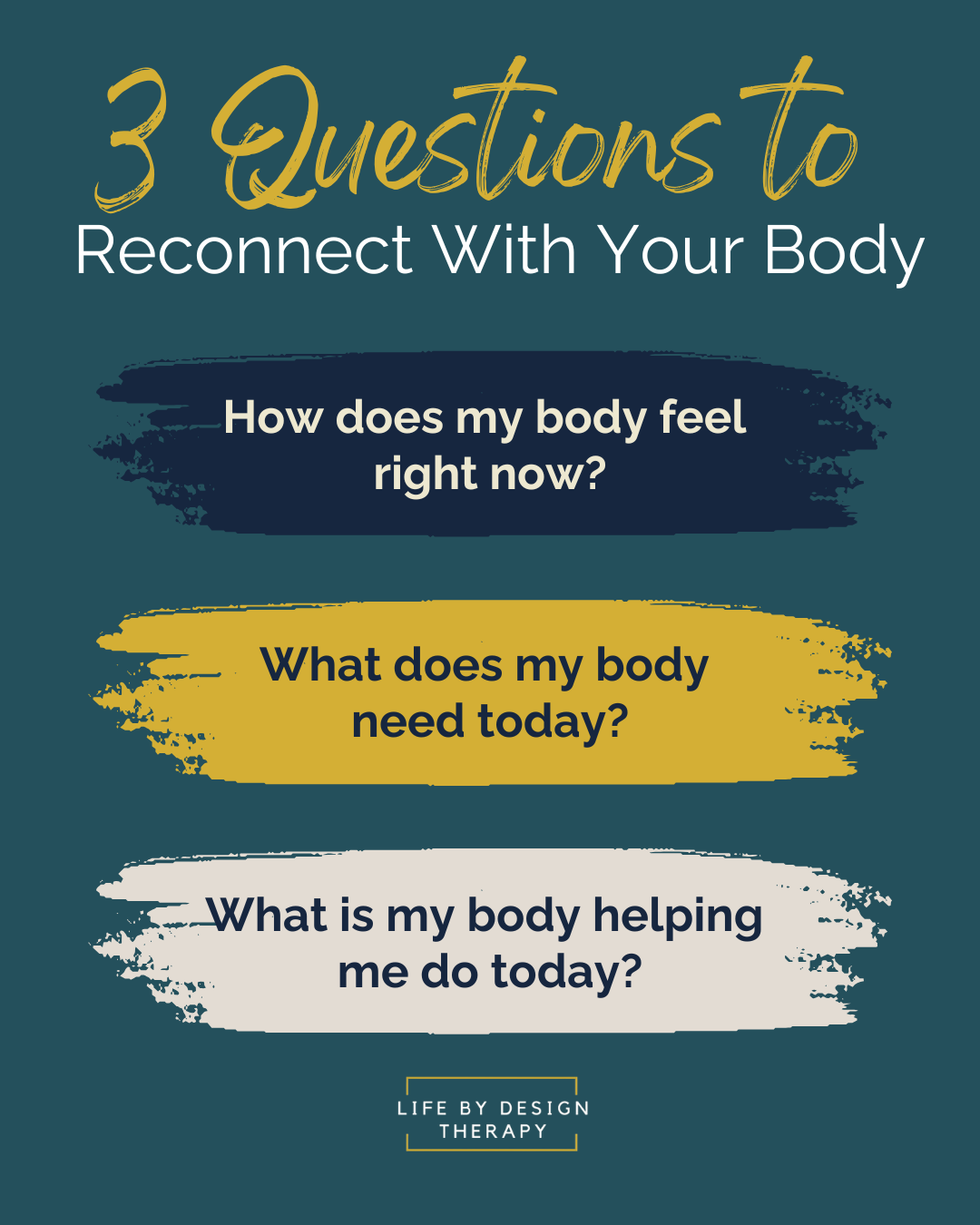
Not by demanding you suddenly love your body…but by gently offering different questions like:
How does my body feel right now?
What does my body need today?
What is my body helping me do today?
It might not seem like a major difference, but it changes the direction of your attention from the outside… back to the inside.
Where Did Body Neutrality Come From?
What’s interesting is that body neutrality didn’t emerge on its own.
It began gaining traction in the early 2010s, largely as a response to the body positivity movement, which, while incredibly important, didn’t always feel accessible for people who were still struggling to feel at home in their bodies.
Body positivity, popularized through fat acceptance activism and voices like Connie Sobczak and Elizabeth Scott, encouraged people to love their bodies as they were. And for many, that message was powerful and needed.
But for others, it felt… out of reach.
If you’ve spent years feeling disconnected from or critical of your body, jumping straight to love can feel overwhelming or maybe even inauthentic. That’s where body neutrality started to take shape as a kind of middle ground.
It wasn’t a rejection of body positivity, but rather an expansion of the conversation. From a Body Neutral perspective, you don’t have to love your body today. You don’t even have to like it.
But what if you could stop fighting it?
Over time, body neutrality has grown into more of a quiet movement—one that’s been shaped by therapists, dietitians, and advocates who focus on reducing body obsession and reconnecting people with their lived experience.
And this is where it naturally overlaps with somatic work.
Because at its core, somatic therapy is also about shifting out of constant observation and into experience.
Instead of analyzing your body from the outside, you begin to notice it from within.
Sensations. Needs. Signals. Capacity.
In that way, body neutrality isn’t just a mindset shift. It’s a different relationship with your body. And if this way of relating feels unfamiliar… that makes sense. Most of us were never taught to experience our bodies this way. We were taught to look at them, compare them, and judge them.
So learning to simply be in your body, without constantly evaluating it, can feel like a completely new language at first. But it’s one that your body already understands.
Why Body Neutrality Can Feel More Realistic Than Body Positivity
The body positivity movement has done a lot of important work.
For many people, it’s been empowering and healing. But for others, it can feel like a really big leap.
Because if your relationship with your body has been shaped by years of criticism, comparison, or pressure…suddenly loving it can feel out of reach.
You might find yourself thinking:
I don’t hate my body… but I don’t exactly love it either.
And sometimes, even that can feel heavier than it should.
This is where body neutrality can feel like a relief.
It removes the pressure to feel a certain way about your body.
You don’t have to love it every day.
You don’t have to feel confident all the time.
You don’t have to force positivity when it’s not there.
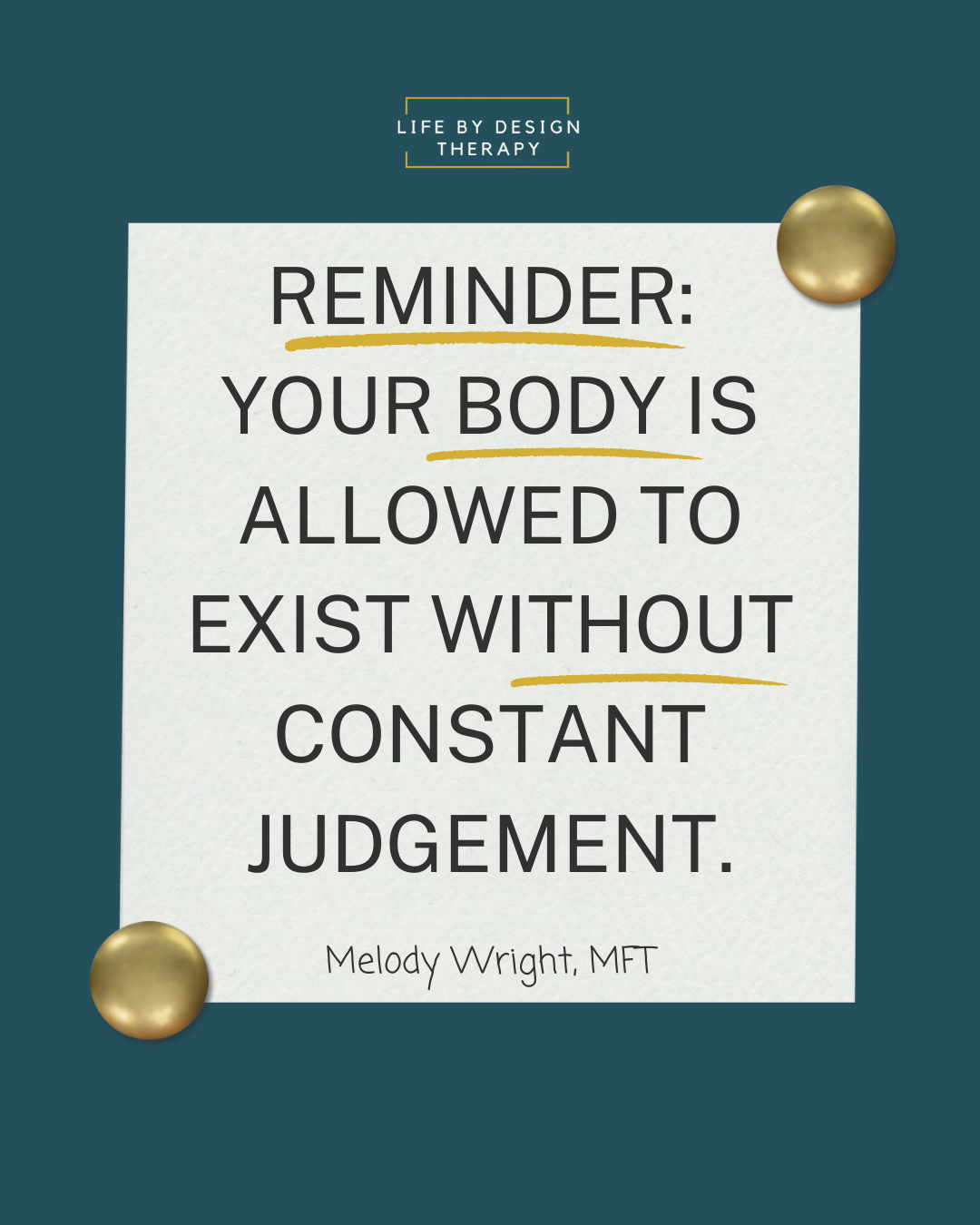
Your body is simply allowed to exist… without constant judgment.
And for many people, that’s where things start to feel a little easier.
How to Practice Body Neutrality in Everyday Life
Body neutrality isn’t about making a drastic shift.
It starts with small, intentional changes. Like noticing when your focus goes to appearance and redirecting it toward what your body is experiencing instead
You might start to notice small changes in how you relate to your body.
You notice how your body feels after a full night of sleep, not because it looks different, but because you have more energy and feel more like yourself.
You start paying attention to how movement affects your energy, even if your appearance hasn’t changed.
You recognize when your body is hungry, thirsty, or overstimulated instead of ignoring it.
You begin to notice how stress shows up physically—tight shoulders, a heavy chest, or a clenched jaw.
Instead of automatically asking, “How do I look?”
You might catch yourself asking, “What’s going on in my body right now?”
At first, this can feel a little unfamiliar, and you might not be used to paying attention in this way. But over time, it can change how you relate to your body. Not because you forced yourself to feel differently about it. But because you stopped focusing on fixing it all the time.
The Real-Life Benefits of Body Neutrality
As you start to build a more stable and supportive relationship with your body, you may begin to notice small shifts.
One of the first changes is often awareness.
You’ll begin noticing what’s going on in your body without immediately judging it or trying to fix it.
You might start to become more aware of when you’re tired, when your body feels tense, when something feels off, or when you feel more settled.
Instead of evaluating how your body looks, you begin paying attention to how it feels and what it needs.
You might start to prioritize your needs in a different way.
You rest when you notice you’re tired.
You eat when your body is actually hungry.
You pay attention to stress earlier, instead of pushing through it.
And over time, that can help you feel more connected to your body again.
Not because everything suddenly feels positive, but because you’re noticing your body more and actually responding to it.
Final Thoughts
If loving your body feels like too big a step right now, that’s okay.
For a lot of people, it is a big step, especially if your relationship with your body has been shaped by years of criticism or pressure.
So instead of trying to jump straight to confidence or self-love, body neutrality offers something more realistic.
It gives you a place to start without having to force how you feel.
You don’t have to convince yourself that you love your body. You don’t have to pretend things feel better than they do.
You just start relating to your body a little differently, with more awareness and a bit more responsiveness to what it actually needs. And over time, that can start to change things in a way that feels more natural. For many people, body image struggles aren’t just about appearance.
They’re connected to deeper experiences like stress, comparison, past criticism, or patterns that have been building over time. And working through that alone can feel overwhelming.
At Life By Design Therapy™, we take a holistic and somatic approach to this work. That means we don’t just explore how you think about your body, we also explore how you experience it.
Together, we help you reconnect with your body in a way that feels safer, more grounded, and more supportive over time. If you’ve been feeling stuck in the cycle of constantly thinking about your body, you don’t have to navigate that alone.
You can learn more or schedule a consultation HERE.
This Week's Affirmations
I can focus on how my body feels instead of how it looks.
I am learning to listen to my body and respond to what it needs.
I don’t have to fix my body to take care of it
My body is allowed to exist without being judged or evaluated.
My needs are valid, and I’m allowed to prioritize them.
Additional Resources
**If you're interested in continuing to explore your relationship with your body, the books below can be a helpful place to start.
Intuitive Eating by RDN Evelyn Tribole, MS and RDN Elyse Resch, MS
Self-Compassion: The Proven Power of Being Kind to Yourself by Kristin Neff
Body Kindness: Transform Your Health from the Inside Out by Rebecca Scritchfield
The Body Keeps the Score: Brain, Mind, and Body in the Healing of Trauma by Bessel van der Kolk M.D
**Some product links are affiliate links, which means we'll receive a commission if you purchase through our link, at no extra cost to you. Please read the full disclosure here.

