
By Melody Wright, LMFT
Are you the person everyone turns to when something needs to get done? The one who remembers the details, anticipates what needs to happen, solves problems, and makes sure everyone is taken care of? Maybe you're successful in your career, dependable in your relationships, and the person your family knows they can count on.
Being that person can feel good. You may take pride in being capable, thoughtful, and someone who follows through. But what happens when being dependable becomes an expectation you feel you always have to meet?
For many highly capable people, the pressure isn't simply about having too much to do. It's about the role they've come to occupy in their families, relationships, and professional lives. And sometimes, the very qualities that make someone successful can also contribute to feeling overwhelmed.
When competence creates more responsibility
There's an interesting relationship between competence and responsibility. The more capable you demonstrate yourself to be, the more likely others are to rely on you.
At work, this might mean being promoted into management or leadership positions. You're recognized for your ability to solve problems, manage people, and get things done. But those positions often come with increased expectations, more decisions to make, and greater responsibility.
The same dynamic can happen in personal relationships. Maybe you're the one who organizes family gatherings, remembers birthdays, coordinates schedules, and notices what needs to happen before anyone else does. Over time, others may become accustomed to you taking the lead.
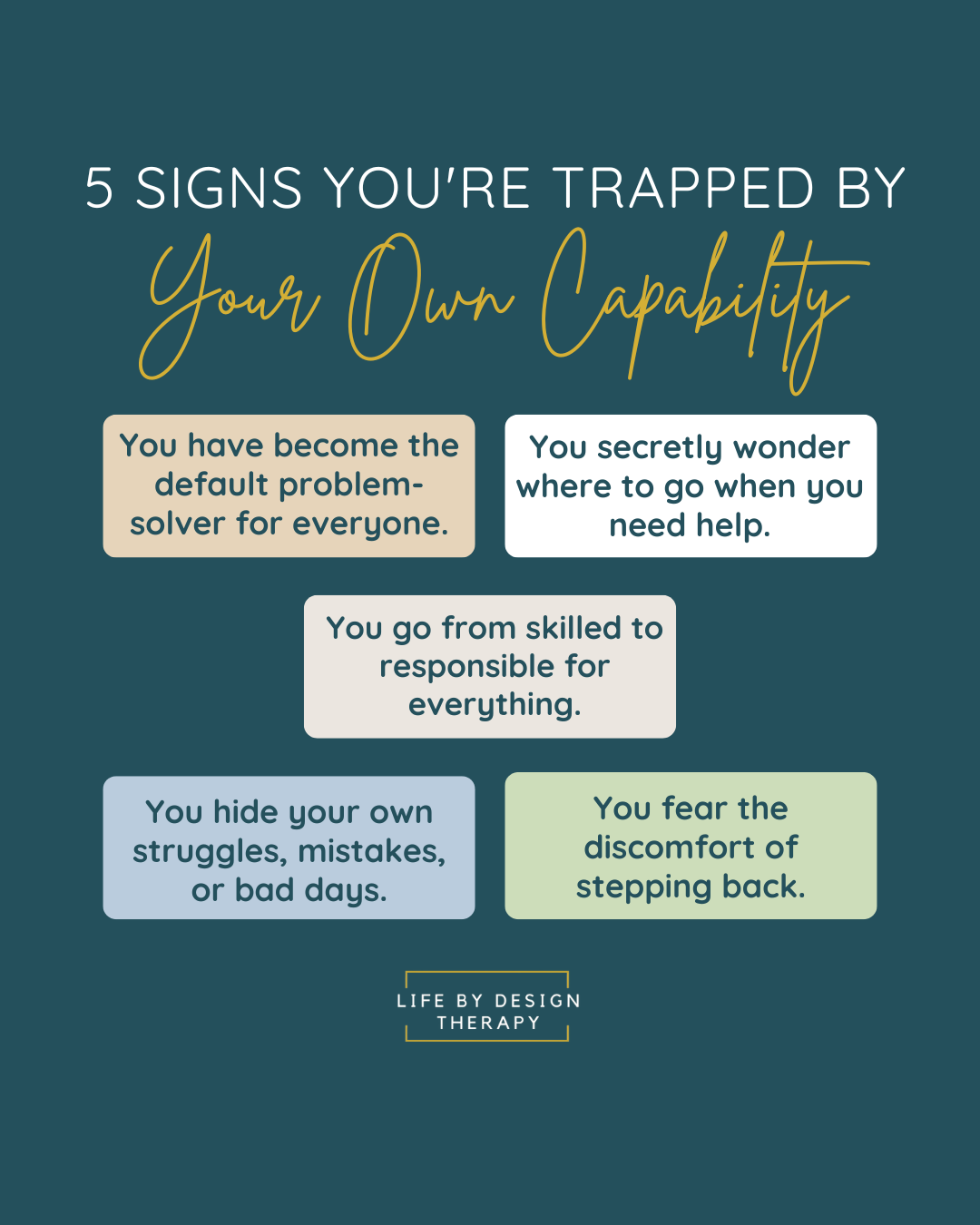
Eventually, being good at something can turn into being responsible for it. And being responsible for a few things can gradually become feeling responsible for everything.
What starts as a strength can become an overwhelming pattern, particularly when there's little opportunity to step back or allow someone else to take the lead.
The psychological side of being dependable
There's often more happening beneath the surface than simply having a lot of responsibilities.
Being the reliable one can become an important part of your identity. You may feel valued because people need you. You may experience confidence and satisfaction from knowing you're capable, prepared, and able to handle difficult situations.
For some people, this role may also connect to longstanding relational patterns. Perhaps you grew up being the responsible one in your family. Maybe you learned to anticipate other people's needs, avoid disappointing others, or take care of things because it helped maintain a sense of stability.
These patterns aren't necessarily conscious decisions. They can become familiar ways of relating to others and understanding your place in relationships.
And there can be genuine rewards. People appreciate you. They trust you. You may feel like you're making a meaningful contribution to the lives of others.
But there's a difference between choosing to be dependable and feeling like you have to be dependable all the time.
When your sense of identity becomes closely tied to being the person who handles everything, it can become difficult to recognize when you're taking on more than you actually want or have the capacity to manage.
The parts of yourself that don't get much room
One of the less visible costs of always being the capable one is that it can leave little room for vulnerability.
When you're accustomed to being the person who has the answers, what happens when you don't have an answer? When you're the one who needs help, feels overwhelmed, or simply doesn't have the energy to show up?
You might find yourself continuing to push through because that's what people expect of you. You may have difficulty asking for support, delegating responsibilities, or allowing others to see you struggle.
There's also the possibility that you become so accustomed to taking care of others that you lose touch with your own needs.
You know what everyone else needs. You know what needs to happen next. You know how to solve the problem. But when someone asks what you want, what would make your life easier, or what you need right now, you may find yourself less certain.
This is worth paying attention to. Being thoughtful and generous toward others doesn't have to come at the expense of having space for yourself.
When changing your role changes your relationships
Another important consideration is that our roles are reinforced by the people and systems around us.
Consider a family where one person has always been the organizer, the problem solver, or the one who makes sure everything gets done. Over time, other family members may come to depend on that person without fully recognizing how much responsibility they've taken on.
When that person begins to change their behavior, the entire family dynamic may shift.
Maybe they stop organizing every gathering. Maybe they don't immediately step in to resolve a problem. Maybe they allow someone else to take responsibility for something they've always handled.
That adjustment can be uncomfortable. Other family members may feel frustrated, disappointed, or uncertain about what to do. They may have to develop skills and take on responsibilities they haven't previously needed to manage.
For the person making the change, this can be difficult, too. They're not only working through their own expectations and habits; they're also navigating the reactions of people who have become accustomed to the old arrangement.
This is one reason changing longstanding patterns can take time. It's not always just about changing an individual behavior. Sometimes, it involves changing the way people relate to one another.
What would it look like to be capable without carrying everything?
The goal isn't to become less ambitious, less thoughtful, or less dependable. These qualities can bring genuine meaning and satisfaction to our lives.
Instead, it may be worth exploring whether you've created enough room for yourself within the life you've built.
Can you be successful without constantly taking on more responsibility? Can you care about your family without being the person who manages every detail? Can you allow others to help, even when they might do things differently than you would?
And perhaps most importantly, can you give yourself permission to be someone who sometimes needs support, makes mistakes, or simply doesn't have it all together?
These are questions worth exploring, particularly if you've found yourself feeling overwhelmed by the expectations you carry.
Sometimes, creating a more fulfilling life isn't about doing more or becoming better at managing everything. It's about understanding the patterns that keep you taking on so much in the first place.
You can be capable and still have needs. You can be dependable without being endlessly available. And you can care deeply about the people in your life without making yourself responsible for everything.
This Week's Affirmations
I can be capable without being responsible for everything.
My worth isn't measured by how much I do for others.
I am allowed to need support, rest, and space for myself.
I can let others take responsibility, even when it's uncomfortable.
I don't have to hold everything together to be someone who matters.
If you're finding yourself overwhelmed by the expectations you carry or struggling to make room for your own needs, therapy can help you better understand these patterns and begin creating different ways of relating to yourself and others. At Life by Design Therapy, we offer holistic and somatic therapy in Berkeley and online. We'd love to help you explore what a more balanced, fulfilling life could look like. Schedule a phone consultation to get started.

